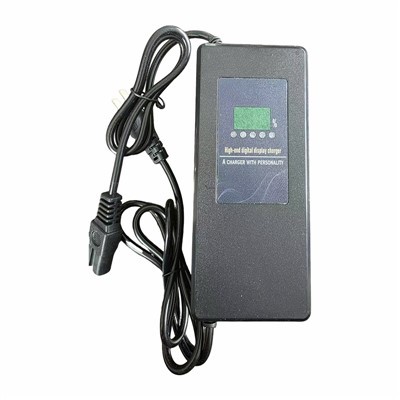
As a seasoned supplier of lead acid battery chargers, I’ve witnessed the growing demand for efficient and reliable charging solutions in various industries. From automotive to renewable energy storage, lead acid batteries remain a popular choice due to their affordability, durability, and wide availability. However, to ensure optimal performance and longevity of these batteries, it’s crucial to understand the charging algorithms employed by lead acid battery chargers. In this blog post, I’ll delve into the intricacies of lead acid battery charging algorithms, explaining how they work and why they matter. Lead Acid Battery Charger
The Basics of Lead Acid Batteries
Before we dive into the charging algorithms, let’s briefly review the fundamentals of lead acid batteries. A lead acid battery consists of one or more cells, each containing a positive electrode (lead dioxide) and a negative electrode (sponge lead) immersed in an electrolyte solution of sulfuric acid and water. When the battery is discharged, a chemical reaction occurs between the electrodes and the electrolyte, producing electrical energy. Conversely, during charging, an external electrical current is applied to reverse the chemical reaction, restoring the battery’s charge.
The Importance of Charging Algorithms
Charging a lead acid battery is not as simple as applying a constant voltage or current. Overcharging can lead to excessive gassing, water loss, and plate degradation, while undercharging can result in sulfation, reduced capacity, and shortened battery life. To prevent these issues and ensure efficient charging, lead acid battery chargers employ sophisticated charging algorithms that adjust the charging voltage and current based on the battery’s state of charge, temperature, and other factors.
Common Charging Algorithms
There are several types of charging algorithms used in lead acid battery chargers, each with its own advantages and disadvantages. The most common algorithms include:
1. Constant Current (CC) Charging
In constant current charging, the charger supplies a fixed current to the battery until it reaches a predetermined voltage limit. This method is suitable for quickly charging a deeply discharged battery, as it allows the battery to accept a high current without overheating. However, once the battery voltage approaches the limit, the charging current must be reduced to prevent overcharging.
2. Constant Voltage (CV) Charging
Constant voltage charging involves applying a fixed voltage to the battery while allowing the charging current to decrease gradually as the battery approaches full charge. This method helps to prevent overcharging and ensures that the battery reaches its maximum capacity. However, it can be slow, especially for deeply discharged batteries, and may not be suitable for all types of lead acid batteries.
3. Float Charging
Float charging is a maintenance charging method used to keep a fully charged battery at its optimal state. In float charging, the charger applies a low, constant voltage to the battery to compensate for self-discharge and maintain the battery’s charge level. This method is commonly used in standby applications, such as uninterruptible power supplies (UPS) and emergency lighting systems.
4. Three-Stage Charging
Three-stage charging is a combination of constant current, constant voltage, and float charging. In the first stage, the charger supplies a high constant current to quickly charge the battery until it reaches a predetermined voltage limit. In the second stage, the charger switches to constant voltage charging to finish charging the battery and prevent overcharging. In the third stage, the charger switches to float charging to maintain the battery’s charge level. This method is widely used in lead acid battery chargers due to its efficiency and ability to prolong battery life.
Advanced Charging Algorithms
In addition to the common charging algorithms, some lead acid battery chargers also employ advanced algorithms that offer additional features and benefits. These algorithms include:
1. Temperature Compensation
Temperature compensation is a feature that adjusts the charging voltage based on the battery’s temperature. As the temperature of a lead acid battery increases, its internal resistance decreases, which can lead to overcharging if the charging voltage is not adjusted accordingly. Temperature compensation helps to prevent overcharging and ensure optimal charging performance, especially in high-temperature environments.
2. Equalization Charging
Equalization charging is a process that involves applying a higher-than-normal voltage to the battery for a short period of time to equalize the state of charge of the individual cells. This method helps to prevent sulfation and ensure that all cells in the battery are fully charged. Equalization charging is typically recommended for flooded lead acid batteries and should be performed periodically to maintain battery health.
3. Adaptive Charging
Adaptive charging is an intelligent charging algorithm that adjusts the charging parameters based on the battery’s state of health, state of charge, and other factors. This method uses advanced sensors and algorithms to optimize the charging process and ensure that the battery is charged safely and efficiently. Adaptive charging can help to prolong battery life, reduce charging time, and improve overall performance.
Choosing the Right Charging Algorithm
When choosing a lead acid battery charger, it’s important to consider the type of battery, its capacity, and the intended application. Different types of lead acid batteries, such as flooded, sealed, and gel batteries, have different charging requirements, and using the wrong charging algorithm can damage the battery and reduce its lifespan. Additionally, the charging algorithm should be compatible with the battery’s state of charge and temperature, and should provide appropriate protection against overcharging, undercharging, and short circuits.
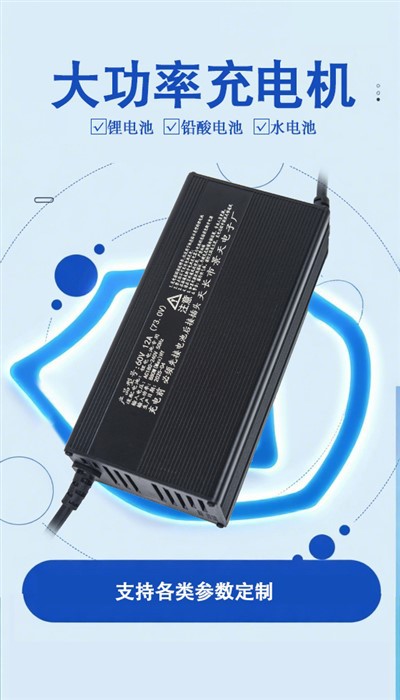
As a supplier of lead acid battery chargers, I can help you choose the right charger and charging algorithm for your specific needs. Our chargers are designed to be efficient, reliable, and easy to use, and we offer a wide range of models to suit different applications and battery types. Whether you need a charger for a small automotive battery or a large industrial battery bank, we have the solution for you.
Conclusion
Lithium Battery Charger In conclusion, understanding the charging algorithms of lead acid battery chargers is essential for ensuring optimal performance and longevity of lead acid batteries. By choosing the right charging algorithm and charger for your specific needs, you can prevent overcharging, undercharging, and other issues that can damage the battery and reduce its lifespan. As a trusted supplier of lead acid battery chargers, I’m committed to providing high-quality products and excellent customer service. If you have any questions or need help choosing the right charger for your application, please don’t hesitate to contact me. I’m here to help you find the best solution for your needs.
References
- Linden, D., & Reddy, T. B. (2002). Handbook of Batteries. McGraw-Hill.
- Kuo, Y. -C., & Chan, C. -C. (2011). Lead-Acid Batteries for Future Automobiles. In Rechargeable Battery Materials (pp. 133-160). Springer.
- Rand, D. A. J., Masters, B., & Moseley, P. T. (2004). The Lead-Acid Battery. Elsevier.
Tianchang Hengze Technology Co., Ltd.
With abundant experience, we are one of the most professional lead acid battery charger manufacturers and suppliers in China. Please rest assured to buy bulk lead acid battery charger made in China here from our factory. If you have any enquiry about quotation, please feel free to email us.
Address: No. 8 Sanxing Road, Qinlan Town Industrial Park, Tianchang City, Chuzhou City, Anhui Province, P.R. China
E-mail: 604894957@qq.com
WebSite: https://www.hengzebc.com/
