What is the sensitivity of a safety edge?
As a safety edge supplier, I’ve encountered numerous inquiries about the sensitivity of safety edges. In this blog post, I’ll delve into what the sensitivity of a safety edge means, why it’s crucial, and how it impacts the performance of safety systems. Safety Edge

Understanding the Concept of Sensitivity in Safety Edges
The sensitivity of a safety edge refers to its ability to detect a physical contact or pressure and trigger a response. This response typically involves sending a signal to stop the movement of a machine or a door, preventing potential accidents. It is a measure of how lightly the safety edge needs to be touched or pressed to activate the safety mechanism.
Safety edges are commonly used in various industrial and commercial applications, such as automatic doors, industrial gates, and machinery. In these settings, the sensitivity of the safety edge plays a vital role in ensuring the safety of personnel and the protection of equipment.
Factors Affecting the Sensitivity of Safety Edges
Several factors can influence the sensitivity of a safety edge. One of the primary factors is the design of the safety edge itself. Different safety edges are designed with varying levels of sensitivity to meet the specific requirements of different applications. For example, a safety edge used in a high – traffic automatic door may need to be more sensitive to detect even the slightest contact, while a safety edge on industrial machinery may have a slightly higher threshold to prevent false alarms.
The material of the safety edge also affects its sensitivity. Soft and flexible materials are generally more sensitive as they can deform easily under pressure. For instance, a safety edge made of high – quality rubber can detect very light touches, making it suitable for applications where precision is required.
The electrical components within the safety edge are another crucial factor. The sensors and wiring inside the safety edge are designed to detect changes in pressure and convert them into electrical signals. The quality and calibration of these components can significantly impact the sensitivity of the safety edge.
Importance of Sensitivity in Safety Applications
The sensitivity of a safety edge is of utmost importance in ensuring the safety of people and property. In industrial settings, machinery can pose significant risks to workers. A highly sensitive safety edge can detect the presence of a person or an object in the path of a moving machine part, immediately triggering the machine to stop. This can prevent serious injuries, such as crushing or shearing accidents.
In the case of automatic doors, a sensitive safety edge can detect when a person or an object is in the door’s path. This ensures that the door stops closing and may even open to avoid trapping someone. This is especially important in public buildings where a large number of people pass through the doors.
Moreover, the sensitivity of the safety edge can also affect the efficiency of the equipment. A safety edge that is too sensitive may cause false alarms, leading to unnecessary stoppages of the machine or door. On the other hand, a safety edge that is not sensitive enough may fail to detect a real hazard, putting people and property at risk.
Measuring and Adjusting the Sensitivity of Safety Edges
Measuring the sensitivity of a safety edge involves applying a known amount of pressure and observing the response of the safety edge. This can be done using specialized testing equipment. The results of these tests can help determine if the safety edge is operating within the desired sensitivity range.
In some cases, the sensitivity of a safety edge can be adjusted. This may involve changing the settings of the electrical components or modifying the physical structure of the safety edge. However, it is important to note that any adjustments should be made by trained professionals to ensure that the safety edge continues to function correctly.
Real – World Applications and Case Studies
Let’s take a look at some real – world applications of safety edges and how their sensitivity impacts the overall safety and performance.
In a manufacturing plant, a large industrial gate is equipped with a safety edge. The gate is used to separate different work areas and is frequently opened and closed. The safety edge on this gate is set to a relatively high sensitivity to ensure that it can detect even small objects or people in its path. This has significantly reduced the risk of accidents in the plant, as the gate stops immediately when it comes into contact with an obstruction.
In a shopping mall, automatic sliding doors are installed at the main entrances. These doors are designed to open and close quickly to accommodate a large number of people. The safety edges on these doors are highly sensitive to ensure that they can detect the slightest touch. This has led to a safer environment for shoppers, as the doors stop closing immediately if they come into contact with a person or an object.
Conclusion
In conclusion, the sensitivity of a safety edge is a critical factor in ensuring the safety and efficiency of various industrial and commercial applications. It is influenced by factors such as design, material, and electrical components. Measuring and adjusting the sensitivity of a safety edge is essential to ensure that it functions correctly and provides the necessary level of protection.
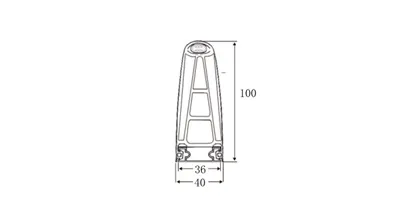
As a safety edge supplier, we understand the importance of providing high – quality safety edges with the appropriate sensitivity for different applications. Our team of experts can help you select the right safety edge for your specific needs and ensure that it is installed and calibrated correctly.
Sensor Processor If you are in the market for safety edges or have any questions about their sensitivity, we encourage you to contact us for a consultation. We are committed to providing you with the best solutions to meet your safety requirements.
References
- ISO 13857:2019 – Safety of machinery – Safety distances to prevent hazard zones being reached by upper and lower limbs.
- EN 12453:2013 – Safety devices for power – operated doors – Safety edges and safety profiles.
Ningbo Futai Safety Edge Technology Co., Ltd.
Ningbo Futai Safety Edge Technology Co., Ltd. is one of the most professional safety edge manufacturers and suppliers in China, also supports customized service. Please feel free to buy advanced safety edge in stock here from our factory. Contact us for free sample and discount information.
Address: No. 1116, Beihuan West Road, Jiangbei District, Ningbo City, Zhejiang Province
E-mail: info@safety-edge.com
WebSite: https://www.safety-edge.com/
