What is the Repeatability of a Flow Meter?
As a professional in the flow meter supply industry, I’ve encountered numerous inquiries about the concept of flow meter repeatability. It’s a crucial aspect that often determines the reliability and effectiveness of a flow meter in various applications. In this blog, I’ll delve into what repeatability is, why it matters, how it’s measured, and its significance for different industries. Flow Meter
Understanding Repeatability in Flow Meters
Repeatability, in the context of flow meters, refers to the ability of a device to provide the same output when the same flow conditions are applied repeatedly. In other words, if you measure the same flow rate multiple times under identical conditions, a flow meter with high repeatability will give consistent readings. This consistency is vital because it ensures that the data collected from the flow meter is reliable and trustworthy.
Let’s consider an analogy to better understand this concept. Imagine you’re using a weighing scale to measure the weight of an object. If you place the same object on the scale several times, and the scale shows a different weight each time, it’s not a reliable scale. Similarly, in the case of flow meters, inconsistent readings can lead to inaccurate data, which can have serious implications in industries where precise flow measurement is critical.
Why Repeatability Matters
The importance of repeatability in flow meters cannot be overstated, especially in industries where accurate flow measurement is essential for quality control, process optimization, and safety. Here are some key reasons why repeatability matters:
- Quality Control: In manufacturing processes, such as chemical production or food and beverage processing, precise flow measurement is crucial to ensure product quality. A flow meter with poor repeatability can lead to inconsistent product quality, which can result in customer dissatisfaction, product recalls, and financial losses.
- Process Optimization: In industrial processes, optimizing flow rates can improve efficiency, reduce energy consumption, and minimize waste. A reliable flow meter with high repeatability provides accurate data that can be used to fine-tune processes and achieve optimal performance.
- Safety: In industries such as oil and gas, water treatment, and pharmaceuticals, accurate flow measurement is essential for safety. A flow meter with poor repeatability can lead to incorrect dosing of chemicals, over or underflow of fluids, and other safety hazards.
Measuring Repeatability
Repeatability is typically measured as a percentage of the measured value or as a fixed value within a specified range. The most common method for measuring repeatability is to conduct multiple measurements under the same flow conditions and calculate the standard deviation of the readings. The lower the standard deviation, the higher the repeatability of the flow meter.
Here’s a step-by-step guide on how to measure the repeatability of a flow meter:
- Prepare the Test Setup: Ensure that the flow meter is installed correctly and that the flow conditions are stable. Use a calibrated reference flow meter to measure the actual flow rate.
- Conduct Multiple Measurements: Measure the flow rate multiple times (usually at least 10 times) under the same flow conditions. Record the readings for each measurement.
- Calculate the Mean and Standard Deviation: Calculate the mean (average) of the measured values and the standard deviation. The standard deviation is a measure of how much the individual readings deviate from the mean.
- Determine the Repeatability: Express the repeatability as a percentage of the mean value or as a fixed value within a specified range. For example, if the mean value is 100 L/min and the standard deviation is 1 L/min, the repeatability can be expressed as ±1% of the mean value.
Factors Affecting Repeatability
Several factors can affect the repeatability of a flow meter, including:
- Flow Conditions: Changes in flow rate, temperature, pressure, and viscosity can affect the performance of a flow meter and reduce its repeatability. It’s important to ensure that the flow conditions are stable and consistent during the measurement process.
- Installation: Improper installation of a flow meter can lead to inaccurate readings and reduced repeatability. It’s important to follow the manufacturer’s installation instructions carefully and ensure that the flow meter is installed in a location where the flow is fully developed and free from disturbances.
- Calibration: Over time, the performance of a flow meter can drift, leading to inaccurate readings and reduced repeatability. Regular calibration is essential to ensure that the flow meter is providing accurate and reliable measurements.
- Maintenance: Lack of proper maintenance can also affect the performance of a flow meter and reduce its repeatability. It’s important to follow the manufacturer’s maintenance instructions and perform regular inspections and cleaning to ensure that the flow meter is in good working condition.
Repeatability in Different Types of Flow Meters
Different types of flow meters have different levels of repeatability, depending on their design and operating principles. Here’s a brief overview of the repeatability of some common types of flow meters:
- Positive Displacement Flow Meters: These meters measure the flow rate by trapping and measuring discrete volumes of fluid. They offer high repeatability, typically in the range of ±0.1% to ±0.5%.
- Coriolis Flow Meters: These meters measure the flow rate by detecting the Coriolis force generated by the fluid flowing through a vibrating tube. They offer excellent repeatability, typically in the range of ±0.05% to ±0.1%.
- Magnetic Flow Meters: These meters measure the flow rate by detecting the voltage induced by the fluid flowing through a magnetic field. They offer good repeatability, typically in the range of ±0.2% to ±0.5%.
- Ultrasonic Flow Meters: These meters measure the flow rate by detecting the time difference between ultrasonic waves traveling upstream and downstream in the fluid. They offer moderate repeatability, typically in the range of ±0.5% to ±1%.
Significance of Repeatability in Different Industries
The significance of repeatability in flow meters varies depending on the industry and the specific application. Here are some examples of how repeatability is crucial in different industries:
- Oil and Gas Industry: In the oil and gas industry, accurate flow measurement is essential for custody transfer, process control, and safety. A flow meter with high repeatability ensures that the transfer of oil and gas is accurate and fair, and that the production process is optimized for maximum efficiency.
- Chemical Industry: In the chemical industry, precise flow measurement is crucial for ensuring product quality, process safety, and environmental compliance. A flow meter with high repeatability provides accurate data that can be used to control the flow of chemicals and ensure that the production process is running smoothly.
- Food and Beverage Industry: In the food and beverage industry, accurate flow measurement is essential for ensuring product consistency, quality, and safety. A flow meter with high repeatability ensures that the ingredients are dosed accurately and that the production process is standardized.
- Water and Wastewater Treatment Industry: In the water and wastewater treatment industry, precise flow measurement is crucial for optimizing the treatment process, ensuring compliance with environmental regulations, and managing water resources. A flow meter with high repeatability provides accurate data that can be used to control the flow of water and chemicals and ensure that the treatment process is effective.
Conclusion
In conclusion, repeatability is a critical aspect of flow meter performance that ensures reliable and accurate flow measurement. A flow meter with high repeatability provides consistent readings under the same flow conditions, which is essential for quality control, process optimization, and safety in various industries. When selecting a flow meter, it’s important to consider its repeatability along with other factors such as accuracy, reliability, and cost.
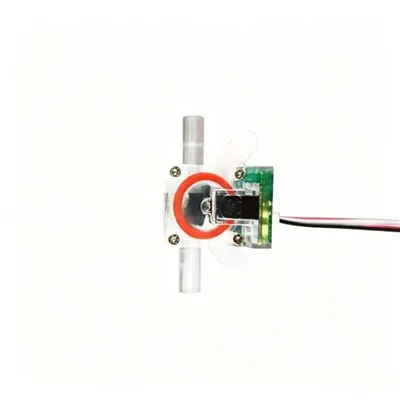
As a leading supplier of flow meters, we understand the importance of repeatability in meeting the diverse needs of our customers. We offer a wide range of flow meters with high repeatability and accuracy, backed by our expertise and technical support. If you’re looking for a reliable flow meter solution for your application, we invite you to contact us for a consultation. Our team of experts will work with you to understand your requirements and recommend the best flow meter for your needs.
Capacitive Liquid Level Sensor References
- ISO 5167-1:2003, Measurement of fluid flow by means of pressure differential devices inserted in circular cross-section conduits running full – Part 1: General principles and requirements
- API Manual of Petroleum Measurement Standards (MPMS), Chapter 22 – Flow Measurement
- AGA Report Number 9 – Measurement of Gas by Multipath Ultrasonic Meters
Shenzhen Fineherc Technology Co., Ltd.
As one of the most experienced flow meter suppliers in China, we’re featured by quality products and low price. Please feel free to buy discount flow meter made in China here from our factory. Welcome to view our website for more information.
Address: 5th Floor, Building D, No. 39, Keji East Road, Torch Development Zone, Zhongshan City,China
E-mail: fineherc@hotmail.com
WebSite: https://www.fineherc.com/
