If you’ve ever worked in a lab, turned on a medical device, or watched a semiconductor chip get manufactured, you’ve probably heard people throw around “specialty gases” and “industrial gases” like they’re the same thing. And for a long time, I thought that too—until I started working in specialty gas supply, and I saw just how big the gap really is. Let’s break this down, because getting it wrong can cost you time, money, or even put safety at risk. Specialty Gases
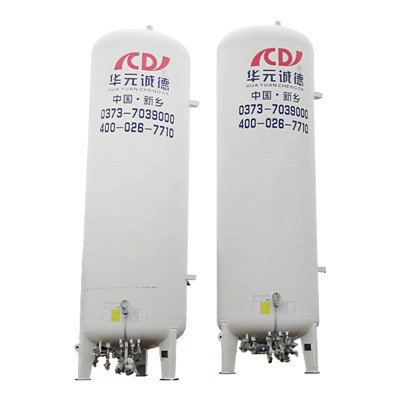
First, let’s start with what industrial gases are, since that’s the more common term people know. Industrial gases are the workhorses of manufacturing, construction, and basic industrial processes. You’ll find them in huge, bulk quantities—stored in massive, high-pressure cylinders or even delivered via pipelines to factories. Think of oxygen for cutting and welding steel, nitrogen for purging lines during chemical production, argon for shielding molten metal, or carbon dioxide for carbonating soda. These gases are made in massive plants, usually through air separation (for oxygen, nitrogen, argon) or as byproducts of chemical manufacturing. Their purity requirements aren’t super tight—for most industrial uses, 99.5% to 99.9% is more than enough, and they’re sold in volumes that run into thousands of cubic feet, not individual small cylinders. If a weld has a tiny bit of impurity, it might weaken a joint, but that’s a manageable risk for most industrial jobs. For example, a construction company building a bridge might buy a 10,000-cubic-foot cylinder of argon at a low per-cubic-foot rate because they don’t need to worry about that 0.1% contaminant.
Now, specialty gases? They’re the opposite in almost every way. These are high-purity, customized gases used in processes where even a part per million (ppm) or part per billion (ppb) of impurity can ruin a product, a test, or a medical treatment. The uses are way more specific: semiconductor manufacturing, lab calibrations, medical diagnostics, aerospace testing, and environmental monitoring. Semiconductor chips, for instance, are made in ultra-clean rooms where even a single dust particle can wreck a $10,000 wafer. If the argon used in the etch process has just a few ppb of moisture, it can cause defects that make the entire chip useless. Calibration gases for air quality monitors, too—if a gas standard has a wrong concentration or a hidden contaminant, the monitor will give bad data, which can lead to wrong policy decisions or missed pollution events.
Let me give you a personal example from my time supplying specialty gases. A few years back, a customer who ran a small calibration lab reached out because their old gas supplier had delivered a “high-purity” nitrogen cylinder that was supposed to be 99.999% pure. But when they tested it, there was 2 ppm of oxygen in it—enough to make their gas analyzers give off readings that were 10% off. The lab had been using that gas for six months, so all their previous calibration data was wrong. That cost them hundreds of hours of rework and made them lose a major client. That’s the kind of problem that doesn’t happen with industrial gases, because their purity standards are just not that high.
Another big difference is volume and packaging. Industrial gases go to big operations, so they’re delivered in bulk—sometimes connected to a pipeline that never runs out. Specialty gases, though, are often small-volume, customized blends. We don’t just sell “nitrogen”; we make blends like 5 ppm of carbon monoxide in nitrogen for calibration of gas detectors, or a mix of helium, oxygen, and carbon dioxide for respiratory testing. Each blend is tailored exactly to a customer’s needs, and we put them in small, often specialized cylinders—some as small as a 10-liter cylinder, because a lab only needs a few hundred cubic feet a month. Industrial gas cylinders are often repurposed after use, but specialty gas cylinders are usually dedicated to a single blend to prevent cross-contamination. That’s a critical detail: if a cylinder that was used for a carbon monoxide blend is cleaned but not perfectly, and then you fill it with a methane calibration blend, the leftover CO will mess up the new gas. We take extra steps to make sure that doesn’t happen, steps that industrial gas suppliers don’t need.
Purity standards are where the science gets really specific. Industrial gases usually follow standards like ISO 9001, but their purity specs are loose. Specialty gases follow way stricter standards—ISO 17025 for calibration, SEMI standards for semiconductors, USP for medical gases. For semiconductor specialty gases, we’re talking 99.9999% (6-nines) purity, sometimes even 99.99999% (7-nines) for advanced logic chips. That level of purity requires extra purification steps—like membrane separation, getter filtration, and cryogenic distillation—that industrial gas manufacturing doesn’t bother with. We also have to test every cylinder we send out, not just rely on a factory batch test. I’ve seen industrial gas suppliers batch-test a whole truckload of oxygen once a month, but we test every single specialty gas cylinder before it leaves our facility. It takes more time, more material, and more precision, but it’s non-negotiable for our customers.
Wait, let’s talk about the applications side, because that’s where the lines start to blur sometimes, but not really. Medical gases: some people think medical oxygen is an industrial gas, but no—medical oxygen is a specialty gas. Because it has to be 99.99% pure, with almost no contaminants, because you’re breathing it. Industrial oxygen, on the other hand, is 99.5% pure, used for cutting. That’s a huge difference. If you accidentally gave someone industrial oxygen, the contaminants would damage their lungs. Another example: carbon dioxide. Industrial CO2 is used for soda fountains and fire extinguishers, but food-grade CO2 (used in food packaging) and medical CO2 are specialty gases, with strict purity for human consumption or food contact. Semiconductors are the biggest end market for specialty gases, by the way—they use more than 20% of all specialty gases produced, and that number’s only going up as chips get smaller.
A common myth I hear is that industrial gases are just cheaper, so if a process uses a lot of gas, you should use industrial. But that’s not always true. I had a customer making LED lights a couple years ago—they were using industrial argon, which cost them $0.10 per cubic foot. But their yield was only 70%, because the argon had a tiny bit of moisture that caused defects. When they switched to our 99.999% argon, even though it was $0.50 per cubic foot, their yield jumped to 92%, so their total production cost went down by 25%. That’s the kind of value specialty gases bring that you don’t see in industrial gases. It’s not just about the price per unit; it’s about the reliability of the end product.
Another key difference: traceability. For specialty gases, every cylinder has a full paper trail—we track where every raw material came from, how the cylinder was cleaned, when it was blended, and the test results before it shipped. That’s required for regulated industries like medical devices, environmental monitoring, and aerospace. If a regulator audits a lab, they need to be able to trace every calibration gas back to its source. Industrial gases don’t need that level of traceability—if a batch is slightly off, the worst that happens is a weld is a little weak, not a national environmental report is wrong.
Let me also address the overlap, because it’s not like there’s a hard line. Some gases are made in both categories, but with different purity. Hydrogen, for example, is used as an industrial gas for refining oil, where 99.9% purity is fine. But it’s also used as a specialty gas for fuel cell testing, where 99.999% purity is needed to prevent fuel cell damage. The same gas, but two completely different products, two different supply chains, two different price points. That’s why it’s so important to know which one you need—if you order industrial hydrogen for a fuel cell lab, you’re going to have problems, and fast.
So why does this matter for you? If you’re a small business owner running a calibration lab, you don’t need industrial nitrogen. If you’re a construction company building a building, you don’t need specialty argon. Picking the wrong one isn’t just a mistake—it can lead to wasted time, lost money, damaged reputation, or even safety hazards. I’ve had customers who came to me after trying to save a few dollars on industrial gases for their high-precision work, and they ended up paying three times more to fix the mess.

At the end of the day, specialty gases are about precision, reliability, and customization. Industrial gases are about volume, affordability, and versatility. They’re both critical to modern industry, but they serve very different needs. If you’re not sure which one you need for your work, or if you have questions about purity standards, blending, or delivery, don’t guess. Our team specializes in helping customers match the right gas to their exact application—we don’t just sell cylinders, we provide the expertise to make sure you get it right. Reach out to our team to discuss your requirements, and we’ll help you find the perfect solution that balances quality, cost, and performance.
Specialty Gases References
- Compressed Gas Association. (2022). Handbook of Compressed Gases (5th ed.).
- ISO 14956:2018, Gas analysis — Purification of gases for calibration purposes.
- SEMI Standard C3.15-1102, Specifications for Ultra-High Purity Specialty Gases for Semiconductor Processing.
- United States Pharmacopeia (USP) <1231>, Gaseous Sterilization and Air Monitoring Gases.
- Global Industrial Gas Association. (2023). Specialty vs Industrial Gases: Market and Technical Trends.
Xinxiang Jiale Intelligent Equipment Co., Ltd.
As one of the leading specialty gases manufacturers and suppliers in China, we also support customized service. Please feel free to buy high quality specialty gases for sale here from our factory. Contact us for more details.
Address: No.3913, 9th Floor, Unit 3, East Commercial and Office Complex, Baolong City Plaza, Hongqi District, Xinxiang City, Henan Province, China
E-mail: cc2397410@gmail.com
WebSite: https://www.jialeasu.com/
