If you’ve ever stared at a creamy salad dressing that doesn’t separate, a smooth ice cream without icy grit, or a loaf of bread that stays soft for days instead of turning stale fast, you’ve relied on food emulsifiers—small but mighty ingredients that most of us don’t think about until they work perfectly. As someone who’s spent the last eight years supplying food and cosmetic additives to bakeries, snack manufacturers, and sauces producers across North America, I’ve seen firsthand how emulsifiers aren’t just “random chemicals” added to stretch shelf life or cut costs. They’re precision tools that turn raw, messy food components into the products we reach for every day. Let’s break down what emulsifiers actually do, why they matter, and how they’re a quiet backbone of modern food production. Food & Cosmetic Additives
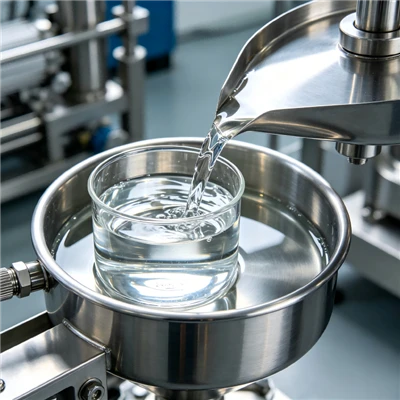
First, let’s get the basics right: emulsifiers are molecules that have two very different ends. One end is hydrophilic—it loves water. The other is lipophilic—it loves fat. That dual nature is the key to their superpower. You’ve probably seen this in action if you’ve tried mixing oil and vinegar for salad dressing: they separate immediately, because oil and water don’t mix on their own. Add a bit of mustard (which contains the emulsifier lecithin), shake it up, and suddenly you get a smooth, uniform liquid that stays combined for hours. That’s emulsification at work. But it’s not just about mixing oil and water. Emulsifiers do a whole host of other jobs that impact texture, shelf life, and even the nutritional quality of food.
Let’s start with texture, because that’s what consumers notice first. Take ice cream, for example. If you mix cream, sugar, and water without an emulsifier, as it freezes you’ll get large ice crystals that make the ice cream hard, grainy, and impossible to scoop smoothly. Emulsifiers like mono- and diglycerides (one of the most common food emulsifiers) work by binding to the fat molecules in the cream, preventing them from clumping together. They also slow the growth of large ice crystals, so every bite is creamy and smooth. I remember a client who made artisanal small-batch ice cream a few years back—they were using all-natural ingredients but their product kept getting hard as a rock in the freezer within a week. We suggested adding a small amount of sunflower lecithin (a plant-based emulsifier) and within two weeks they re-launched with a product that was selling out at local grocery stores. They told us customers kept commenting on how easy it was to scoop, and that’s exactly the emulsifier doing its job.
Baked goods are another big area where emulsifiers make a huge difference. If you’ve ever had a slice of bread that goes stale after two days, that’s because starch retrogradation—a process where the starch molecules in flour re-crystallize as the bread cools and dries out. Emulsifiers bind to starch molecules, stopping them from rearranging and forming those hard, crumbly structures. That means bread stays soft for longer, which cuts down on food waste from spoiled baked goods. For bakeries, that’s a game-changer: if their bread only stays fresh for a day, they have to throw out half the unsold loaves. Add an emulsifier like DATEM or sodium stearoyl lactylate (SSL), and their bread can stay fresh for up to five days, reducing waste and boosting their bottom line. We supply these emulsifiers to several regional bakery chains, and one of them told us that since switching, their monthly food waste from bread has dropped by 35%. That’s not just good for their business—it’s good for the planet too.
Next, there’s shelf life. Emulsifiers don’t just stop oil and water from separating—they also help preserve food by improving texture stability in storage. Take processed sauces like mayonnaise or salad dressings. Without emulsifiers, the oil would rise to the top of the jar within a day, leaving a watery layer at the bottom. Emulsifiers keep those ingredients mixed, so the product looks consistent from the first use to the last. For packaged foods, that means the product looks good on store shelves for weeks or even months, which is critical for both consumer trust and retailer requirements. We had a client who made a line of specialty salad dressings for national grocery chains—they were struggling with their creamy Caesar dressing separating during shipping from their factory in the Midwest to stores on the East Coast. We worked with them to adjust the blend of emulsifiers, and now the dressing arrives at stores perfectly mixed, no matter how long the shipping time. That’s the difference a well-matched emulsifier blend can make.
Emulsifiers also play a role in nutritional quality, which is a big focus for many food manufacturers right now. For example, when it comes to low-fat or reduced-sugar products, emulsifiers can help mimic the texture that’s lost when fat or sugar is removed. Fat adds creaminess, so when you take fat out of yogurt or ice cream, you’re left with a watery, thin product. Emulsifiers bind to the remaining fat and water molecules, creating a similar smooth texture to full-fat versions without the extra calories. We’ve been supplying emulsifiers to a plant-based yogurt maker that wanted to create a product with less sugar but still tasted like the full-sugar versions. By adjusting the amount of lecithin and guar gum (a hydrocolloid that works well with emulsifiers), they were able to cut sugar by 25% without sacrificing texture or taste. That’s helping them meet consumer demand for healthier options while still keeping their products appealing.
Now, it’s important to address the elephant in the room: emulsifiers have gotten some bad press in recent years, with some studies linking high levels of certain synthetic emulsifiers to gut health issues. I take these concerns seriously—our company only supplies emulsifiers that are approved by regulatory bodies like the FDA, EFSA, and Health Canada, and we work closely with our clients to use them in safe, recommended amounts. The key here is that emulsifiers are not “bad” ingredients—they’re tools, and like any tool, they have to be used correctly. The FDA has approved over 30 emulsifiers for use in food, and most are considered safe when used in accordance with good manufacturing practices. As an additive supplier, we prioritize transparency: we provide our clients with safety data sheets for every product we sell, and we offer support to help them navigate regulations and use emulsifiers in ways that align with their consumer health goals. We’ve even worked with a few clients to switch from synthetic emulsifiers to plant-based, organic options like sunflower lecithin and quillaja extract, to meet the growing demand for clean label products.
Let me also talk about the side of our business that many people don’t see: we supply emulsifiers for cosmetics too. Wait, emulsifiers in cosmetics? Exactly the same principle! In creams, lotions, and makeup, you have oil and water components that need to stay mixed. An emulsifier in a face moisturizer works the same way as in salad dressing—keeping the oily moisturizing ingredients mixed with the water-based humectants so the lotion is smooth and easy to apply, not a greasy or watery mess. It’s a perfect example of how emulsifiers are versatile, working across food and personal care products to solve the same basic problem of mixing two immiscible substances.
Over the years, I’ve seen the food industry change a lot—from the focus on longer shelf life to the rise of plant-based products, clean label, and healthier options. Emulsifiers have evolved too, not just in the types available, but in how they’re formulated and used. What hasn’t changed is their core function: turning disparate ingredients into a cohesive, enjoyable product that meets consumer expectations. I’ve had clients come to us thinking emulsifiers are just a way to cut costs, and after working together, they realize they’re a critical part of product development, texture, shelf life, and even nutrition.
As a supplier, our job isn’t just to sell emulsifiers—it’s to partner with our clients to solve their specific challenges. Whether a bakery needs to reduce bread staling, a sauce maker needs a dressing that won’t separate, or a cosmetic brand needs a stable lotion, we work with them to find the right emulsifier (or blend of emulsifiers) that fits their needs. We test products in our in-house lab, help with formulation adjustments, and stay up-to-date on the latest regulatory changes so our clients don’t have to. It’s not just about moving product—it’s about building long-term relationships based on trust, because we know that when our clients succeed, we succeed too.
If you’re a food or cosmetic manufacturer looking to improve your product’s texture, shelf life, or nutritional profile, or if you have questions about which emulsifier is right for your needs, we’re here to help. Our team has decades of experience working with all types of products, from artisanal small-batch goods to large-scale commercial lines. We offer flexible ordering, competitive pricing, and expert support every step of the way. Don’t hesitate to reach out to our team to start a conversation about how emulsifiers can enhance your products and grow your business.
Inorganic Salts References
- Codex Alimentarius Commission. (2021). General Standard for Food Additives (GSFA). Food and Agriculture Organization of the United Nations/World Health Organization.
- American Dietetic Association. (2019). “Emulsifiers in Food: A Review of Their Functions, Safety, and Role in Food Products.” Journal of the Academy of Nutrition and Dietetics, 119(10), 1672-1685.
- Institute of Food Technologists. (2020). “Emulsifiers: Balancing Function and Consumer Needs in Modern Foods.” IFT Annual Meeting Technical Program Proceedings.
- European Food Safety Authority (EFSA). (2022). “Re-evaluation of Food Additives: Emulsifiers, Stabilizers, Thickeners and Gelling Agents.” EFSA Journal, 20(5), 721-745.
- Smith, A. et al. (2021). “Starch Retrogradation in Bakery Products: Mechanisms and Mitigation Strategies Using Emulsifiers.” Journal of Food Science, 86(3), 987-1001.
Shanghai Dingwujin Chemical Co., Ltd.
Shanghai Dingwujin Chemical Co., Ltd. is one of the most professional food & cosmetic additives suppliers in China. We cooperate with qualified Chinese manufacturers and provide high quality customized service. With over a decade of experience in local chemical trade, we have long been deeply engaged in the markets of EU Central & Eastern Europe, the Western Balkans, Ukraine and Moldova. Welcome to buy bulk high quality food & cosmetic additives made in China here from our company.
Address: No. 12, Lane 199, Yefan Road, Yexie Town, Songjiang District, Shanghai, P.R.China
E-mail: dwjchem@dwjchem.com
WebSite: https://www.7dchem.com/
