When you’re in the LNG storage tank game, you know that getting a big cryogenic tank from our facility to your site is way more complicated than just loading it on a truck and hitting the road. I’ve been doing this for 12 years now, and I’ve seen firsthand how one wrong move with transport can turn a $2 million tank into a pile of scrap—and cost you months of delay. Today, I’m breaking down exactly how we move these heavy, super-sensitive tanks, straight from the people who handle it every single day at our LNG storage tank supplier team. LNG Storage Tank

First off, let’s get one thing straight: LNG storage tanks aren’t like your standard above-ground steel tank you’d use for a residential water heater. They’re built to hold liquefied natural gas at -162°C, which means they’re double-walled (usually inner stainless steel, outer carbon steel, with a thick layer of perlite insulation in between) and can weigh anywhere from 50 tons for a small 50m³ unit up to 200+ tons for a 10,000m³ bulk tank. That size and weight alone rules out regular transport options right off the bat. Most of our tanks are too big to fit on a standard flatbed trailer—we’re talking 10+ meters long, 4+ meters wide, and 5+ meters tall for even mid-sized units. So first step: route planning that’s way more detailed than your weekend road trip.
We don’t just map the shortest distance from our plant to your location. We have to check every overpass, bridge, power line, street sign, and even tree along the way. Last year, we almost messed up a delivery to a remote processing site in West Texas when we found a 12-foot overpass that the tank was 6 inches too tall to clear. We had to reroute 180 miles out, which added 3 days to the timeline and $12,000 to transport costs. That’s the stuff no one tells you about unless you’ve been there. We also work with state and local transportation departments to get special permits—these aren’t the temporary “oversize load” stickers you get for moving a sofa. We have to file permits for over-dimensional cargo, coordinate pilot cars, and even get police escorts for sections of highway where heavy loads can’t drive at night. Oh, and don’t forget rail options! For tanks that are too big for road transport (like our 15,000m³ units), we use specialized rail cars that are designed to handle cryogenic loads. We’ve moved 3 massive tanks via rail to a plant in North Dakota a few years back, and that required even more coordination with rail operators to make sure the tank’s weight distribution didn’t damage the tracks.
Next up: the actual loading and securing process. You can’t just hoist a 100-ton steel tank with a regular crane and toss it on a trailer. We use heavy-duty, low-bed trailers specifically built for oversize loads—these have extra-low decks to keep the tank’s profile as short as possible, and reinforced axles that can handle the weight without bending. Loading is a two-person job: our on-site logistics lead works directly with the crane operator to get the tank lifted perfectly level, because tilting a cryogenic tank even 10 degrees can damage the perlite insulation inside. Once the tank’s on the trailer, we use heavy-duty steel chains, custom-fabricated brackets, and even hydraulic winches to secure it down. We also add padding between the tank’s outer steel and the trailer frame to prevent scratches during transport—scratches might seem minor, but they can lead to corrosion later, which is a big no-no for LNG storage. For rail moves, we use special cryogenic tank cradles that are bolted to the rail car, and we fill the insulation gap temporarily with a lightweight filler to keep the inner tank from shifting during transit.
Wait, I know what you’re thinking—what about the cold? You might assume that during transport, we have to keep the tank cold, but actually, when the tank leaves our facility, it’s at ambient temperature. We don’t pre-cool it until it’s at your site, because cooling it too early would waste nitrogen and add unnecessary cost. That said, we do take steps to protect the insulation during transport. The perlite inside is super fine, and if it gets wet (from rain or road spray), it loses 70% of its insulating power. So we cover the tank with a heavy, waterproof tarp that’s UV-resistant to stand up to summer heat in Arizona or winter snow in Minnesota. Last winter, we delivered a tank to a site in Wyoming where we had to stop 2 hours into the drive to re-secure the tarp after a gust of wind ripped a corner loose. We had to pull over on a remote highway and fix it with duct tape and extra straps— not exactly how I wanted to spend my evening, but it kept the perlite dry.
Then there’s the transit itself. We don’t drive these tanks around like regular trucks. Our transport teams are specially trained to handle oversized, heavy loads. They drive at speeds no higher than 55 mph on highways, and 35 mph on local roads to prevent sudden stops or turns that could jostle the tank. We also schedule breaks every 4 hours to check the chains, straps, and tarp—no one wants a 100-ton tank moving down the highway. For long-haul moves (like from our plant in Louisiana to a site in Florida or Canada), we use overnight routes for parts of the trip where traffic is light, but only if we’ve confirmed all overpasses and power lines are clearly marked for nighttime clearance. Oh, and we always have a backup plan. Last year, a hurricane hit the Gulf Coast right as we were supposed to ship a tank to a refinery in Texas. We had to hold the tank for 5 days until the storm passed, and even then, we had to add extra time to the route to avoid flooded roads. That’s just part of the job.
Once we get to your site, the unloading process is just as important as the transport. We coordinate a crane at your location that’s rated for the tank’s weight (no skimping here—always go 20% above the tank’s weight to be safe). We check the site’s foundation ahead of time too—make sure it’s level and can support the tank’s weight, because if it’s not, even a perfect transport can lead to alignment issues when setting the tank down. Once the tank is set, we remove all the transport brackets and check the insulation one last time for any damage that might have happened during the move. We’ve never had a tank arrive with major damage, but we do spot small scratches or loose tarp pieces sometimes—nothing a little touch-up can’t fix.
I know this might sound like a lot, but it’s why our clients trust us with their LNG storage needs. We don’t cut corners on transport because a tank delay can shut down your entire operation. We’ve seen what happens when suppliers use regular trailers or skip permit checks—their tanks get stuck on bridges, damage roads, or arrive with insulation issues that cost thousands to fix. That’s not the experience we want for our clients.
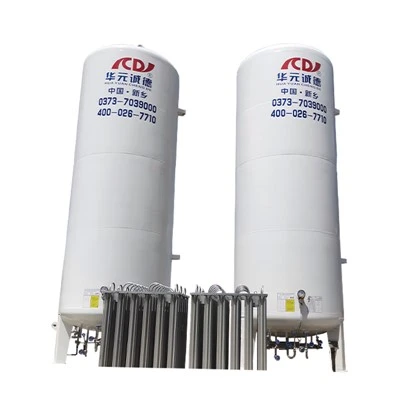
If you’re in the market for an LNG storage tank, you shouldn’t just ask about price or size—ask how the supplier handles transport. Do they use specialized trailers? Do they coordinate permits and pilot cars? Do they have experience moving tanks to remote or tricky locations? At our team, we’ve moved over 500 tanks across North America, and we’ve got the logistics process down to a science. We handle every detail from the second the tank leaves our plant to the moment it’s safely set on your foundation.
LNG Cryogenic Pump Skid If you’re ready to get started on your LNG storage project, we’re here to walk you through every step—from design and fabrication to transport and installation. Whether you need a small 50m³ tank for a remote wellsite or a 10,000m³ bulk tank for a processing plant, we’ve got the expertise to get it to you on time and in perfect condition. Don’t let transport delays or damage hold your project back—reach out to our team today to discuss your needs, and we’ll give you a transparent timeline and cost estimate that includes every part of the process.
References
- Gas Processors Association. (2021). Guidelines for Transporting Cryogenic Storage Tanks.
- American Association of State Highway and Transportation Officials. (2020). Oversize and Overweight Load Permit Manual.
- Cryogenic Engineering Laboratory, University of Wisconsin-Madison. (2019). Insulation Protection During Cryogenic Tank Transit.
- Association of American Railroads. (2022). Specialized Rail Transport for Cryogenic Cargo.
Xinxiang Huayuan Container Equipment Co., Ltd.
With abundant experience, we are one of the most reliable LNG storage tank manufacturers and suppliers in China. We warmly welcome you to buy durable LNG storage tank made in China here from our factory. If you have any enquiry about cooperation, please feel free to email us.
Address: No.2, South Road, Industrial Cluster Zone, Genghuang Township, Fengquan District, Xinxiang City, Henan Province
E-mail: cncd527@gmail.com
WebSite: https://www.huayuanequipment.com/
